NEW: Trump’s “Big Beautiful Bill” Puts Feds in Total AI Control — Here’s Why Even Supporters Are Worried
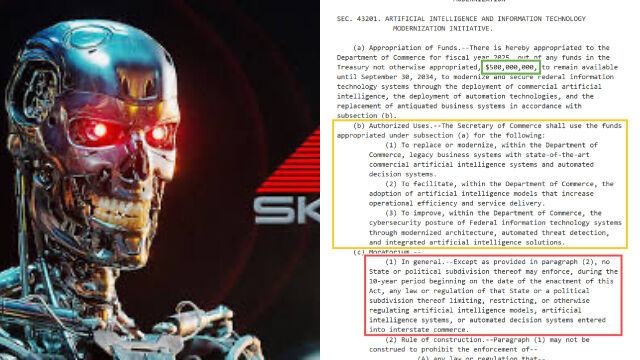
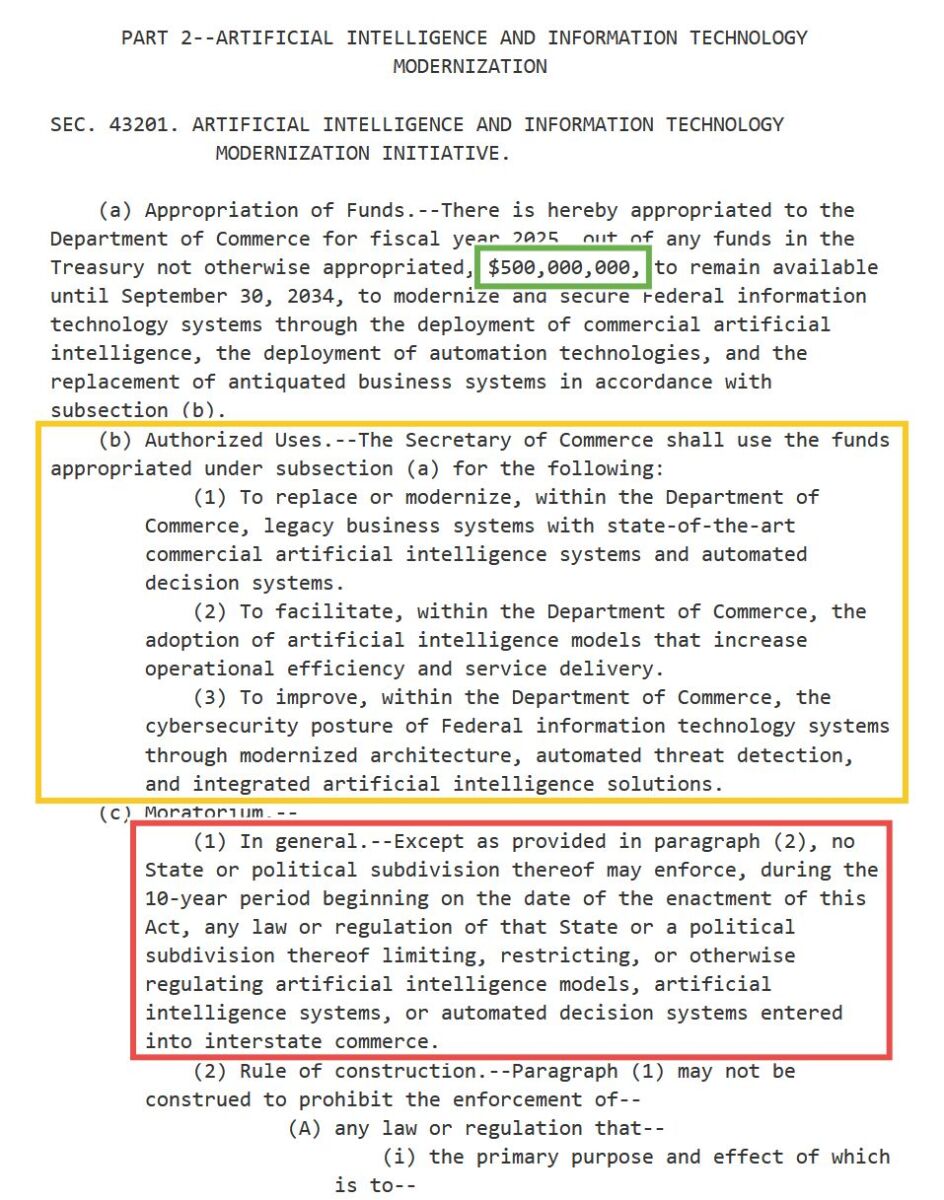
President Trump’s “Big Beautiful Bill” is making waves, but not all of them are celebratory. The legislation, which passed the House and is now headed to the Senate, includes a bombshell provision: a 10-year ban on state-level AI regulation, centralizing control with the federal government. Disclose.tv shared the details on X, highlighting Section 43201, which allocates $500 million to modernize federal tech with AI while stripping states of their right to oversee the technology.
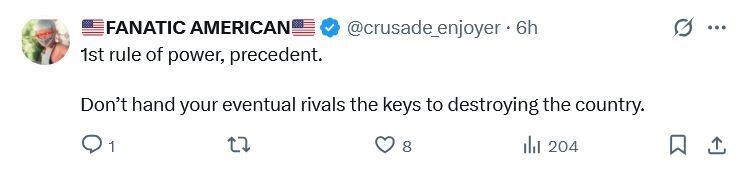
For Trump’s base, this move promises innovation, but even his staunchest supporters—like the Hodgetwins—are sounding the alarm over what they call a “recipe for disaster.” Here’s why.




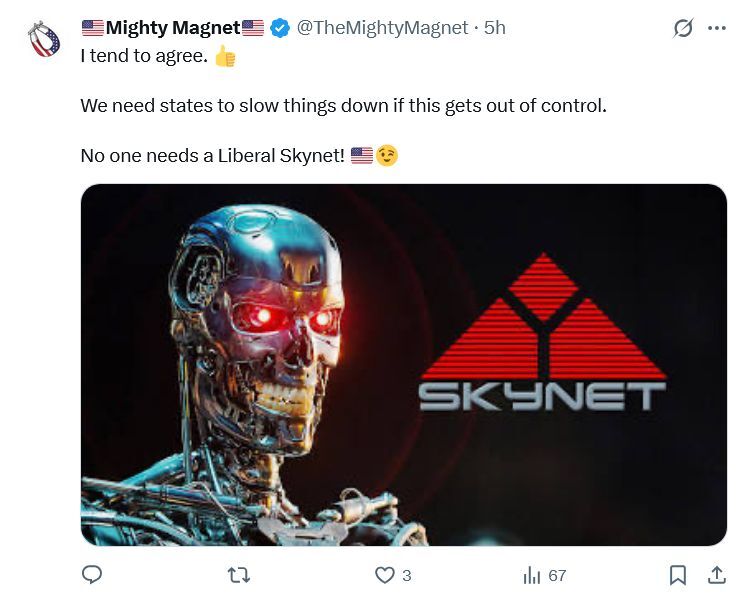
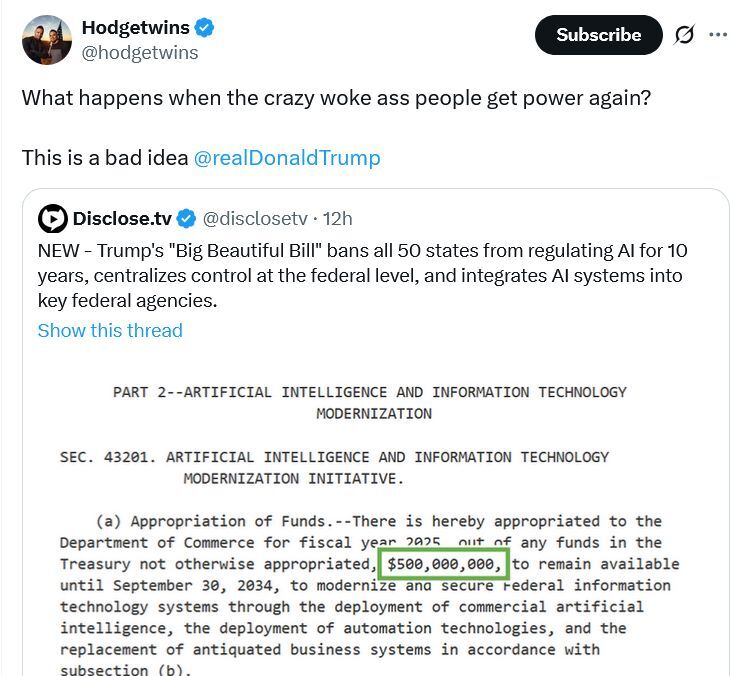
The bill’s language is clear. It prohibits states from enforcing any laws or regulations on AI for a decade, leaving oversight solely in the hands of the feds. The funds will go toward replacing legacy systems with “state-of-the-art commercial AI,” boosting efficiency in agencies like the Department of Commerce. On paper, it’s a win for progress—streamlining government and cutting red tape. But the reality is far messier. With no state oversight, there’s no local accountability, meaning if AI screws up in critical areas like hiring, housing, or policing, citizens could be left powerless. The Hodgetwins didn’t hold back on X, warning that this could lead to “AI running wild” with “no one to stop it.”
The concerns aren’t just theoretical. The bill’s timing coincides with a broader push by the Trump administration to partner with tech giants like Palantir for national data collection, a move already raising privacy red flags. Without state-level checks, critics fear a surveillance state could emerge unchecked. Even Trump supporters, who generally back his deregulation agenda, are uneasy. “This is how you get Skynet,” one user quipped, referencing the dystopian AI from *Terminator*. Others point to the lack of federal AI laws—Biden’s AI Bill of Rights was non-binding, and Trump scrapped his safety standards, leaving a regulatory vacuum.
For many, the worry isn’t about innovation—it’s about control. Centralizing AI governance risks handing too much power to a handful of federal players, potentially stifling the diverse approaches states like Utah and Maryland have taken with their own AI oversight laws. As the bill heads to the Senate, the debate is heating up. Trump may see this as a bold step forward, but even his allies are wondering if it’s a step too far.
*Opinion Disclaimer: The views expressed in this article are those of the author and do not necessarily reflect the opinions of the publication or its affiliates. The analysis of the bill and its implications is based on public reactions and does not endorse or oppose any political party or candidate.*

I’m shrewd, passionate, learned and energetic, God-fearing and patriotic. I’ve done a fine job reintroducing good old American conservatism to a new generation of Americans. I’ve earned the love and friendship of many, the hatred of some, but the respect of all.


